Wednesday, February 23, 2011


My new boards can turn on a Toonie


Last week I slid over “the hump” twice during snowstorms to Port Alberni to help out with the B.C. Institute of Technology’s Railway Conductor’s training class. The Industrial Heritage Society in the Alberni Valley has been very involved in BCIT’s training program for several years. This particular conductor’s class was a groundbreaking group as it was the first encompassing an all-aboriginal cliental.

PHOTO: The first all-aboriginal conductor’s class on the Alberni Pacific Railway aboard APR Diesel #8427 with engineer/instructor Rollie Hurst. On the ground (L to R) as APR conductors are myself with Irving McIntyre (who assisted with instruction) and BCIT instructor John Wetzel. 

When I tell folks about the training program they’re usually quite surprised that one can actually get a job as a railway conductor in this day and age where computers seem to run everything. Most people tend to think of a railway conductor in relation to a passenger train – a figure from a bygone era in a tailored uniform and roundish cap who worked his way through a rail car punching traveller’s tickets. However, on every freight train there is also a conductor. The job involves switching cars, making or splitting up trains and safely moving cars between yards based on instructions originating with the management of a particular railway through the company’s dispatch offices. It’s outdoor work in all kinds of weather. When students graduate from the BCIT program they are able to find work with Canada’s two national railways or with a short line industrial rail operator. Presently the placement rate for graduates of the program is close to 100%.
The Alberni Pacific Railway is able to offer the students a real-life experience of railroad work for their practicum, unlike their own facility on the Lower Mainland where BCIT has access to only about 1300 feet of track. In Port Alberni the Industrial Heritage Society maintains a large multi-track yard and a 6-mile mainline run out to McLean Mill. 
A reminder that the Industrial Heritage Society has their Annual General Meeting at Echo Centre this Tuesday Feb 22 starting at 7:30 pm. Anyone is welcome to come and hear the guest speaker. Speaking will be Ray Barron who will make a presentation on the logging railway speeders that used to carry loggers from the camps to the worksite in the days before the transition to truck logging. When I was in high school the Music & Drama Department made an annual trip to the logging camp at Franklin River. Getting there was half the fun, as we’d travel by speeder from tidewater on the Alberni Inlet by logging railway to Camp B in the interior of Vancouver Island. The travelling show was aptly named Camp B Capers. If you’d like to support the work of the Industrial Heritage Society, memberships can be purchased for $15 at the meeting.  
* * * * * * * * * * * * * * * * * * * * 
On Thursday I purchased a brand-new pair of skis, not because I wanted to, but because I lost mine. In spite of the fact I’m a little embarrassed, I’m going to tell you my tale. In January I was skiing on Mount Washington and the weather was miserable with a howling wind and blowing snow. At day’s end I made for my van in the parking lot. In order to get out of the extreme cold I climbed inside the van to take my boots off, leaning my skis against the side of the van on the passenger side. Turning on the radio I proceeded to listen to the CBC while I ate a andwich. I don’t know if it was the music I’d been listening to that distracted me but after eating I put the van in gear and drove away. Arriving home I went to put my skis away and…you got it...no skis. Calls to Mount Washington’s Lost and Found Department over the next few days failed to turn up the missing skis. 


PHOTO: The sun was shining as I tried out a new pair of skis on Mount Washington on the weekend. Unfortunately the young fellow who took my photo didn’t lower the camera enough to fully show the new boards.

I was very upset losing the skis as they’d been a Christmas present from my family 12 years ago. However, with the advancements in ski technology they really needed to be replaced. Browsing the sporting goods stores the last few weeks I patiently waited for the prices to drop. Finally, last Thursday one store slashed their ski prices by over 50%. It was time to buy. When I learned to ski many years ago at Forbidden Plateau, one chose the ski length by holding your arm up high and buying the skis that came to your fingertips. Today it’s the opposite. Just about everyone uses skis less than their height. 
I could hardly wait to try out my new short-boards so I headed for Mount Washington on Friday morning. However, reaching Courtenay I found the highway almost impassible with blizzard conditions. Several semi-trailer trucks and a few highballing individuals in 4X4’s had already ended up in the weeds. I gingerly turned around at the first opportunity and headed home. There was no way I was going to get up the steep Mount Washington roadway. Besides I have little patience for lying on an icy roadway trying to strap on a set of automobile chains.
The weather report the following day was calling for a sunny day so early Saturday morning I headed for Mount Washington. By sunrise I had a prime spot in the parking lot close to the lodge. I normally avoid the weekend crowds on the slopes but I was itching to give my new skis a go. I figured if I hit the slopes at the opening bell I’d be able to get a number of runs in before the weekend hordes arrived.
It was a stunning view from the top of the chairlift as I pointed my shiny new skis downhill for their baptismal run. I didn’t know what to expect from them. My old skis were not only much longer but had nearly a constant width from the tips to the tails. My new ones had a wide tip, narrow waist, and wide tail. From the moment I headed down the first slope I marveled at the difference. I had better control and making a turn was a breeze. In fact I found them almost too easy to turn, at one point getting over confident on a steep pitch, which resulted in a spill. It wasn’t long before I had a confident feel for them.
The first runs of the day were heavenly with very few early risers on the slopes. However, by 11 am the crowds were packing the lift lines with a 30-minute wait. In anticipation I’d just purchased a half-day pass so by 1:30 I was 
heading home. Besides I had a gig at the Shady Rest Pub in the evening and I reasoned it best I not be tired for that. All in all I was thrilled with my ski purchase. I can hardly wait for my second outing.

PHOTO: The conductor’s class inspects a derailer across the highway from the paper plant in Port Alberni. A derailer is a wedge-shaped piece of steel which fits over the top of the rail. If a car or locomotive attempts to roll over it, the wheel flange is lifted over the rail to the outside, derailing it. When not in use, the derail folds away, leaving the rail unobstructed. Derailers are used to prevent unattended railway cars in a siding from entering an operational mainline track where the run-away cars could cause an accident. 

PHOTO: A replica of a speeder built to run on the narrow-gauge loop track at the Duncan Forest Museum in the Cowichan Valley. The Industrial Heritage Society is currently restoring an actual logging camp speeder, which they hope will be running on the Alberni Pacific Railway this summer. 


Wednesday, February 16, 2011

From Bieber to Bagpipes - it was a diverse weekend
On Friday at the Galaxy Theatre in Nanaimo I caught the première performance of the Justin Bieber 3-D documentary film Never Say Never. Being an early afternoon matinee, I figured I could avoid the screaming teeny-bopper hordes who’d be showing up later in the day when school let out. Good choice as there were only about 15 souls in the theatre – those teens playing hooky and myself. I’m sure the youngster at the box-office was confused as to why a mature gentleman could possibly want to subject himself to Bieber’s new flick. Baffling him further was my request for a ticket to the Metropolitan Opera’s 
performance of Nixon In China scheduled for 10 am the following morning. “What’s an Opera?” he asked. 
Having been assaulted of late by the media hype surrounding the ascendance of pop culture’s latest superstar Justin Bieber, I had to find out for myself what all the fuss was about. Still in high school when Elvis wiggled his way into my young life, I’d moved on to Music College in California by the time Beatlemania had laid waste to the music I’d grown up with. My musical heroes were the Big Bands of Stan Kenton and Woody Herman and the small instrumental combos of the West Coast cool jazz movement led by the likes of Dave Brubeck, Gerry Mulligan, Stan Getz, Shelley Manne and countless others. I digress.
Does Justin Bieber pack the durable musical clout that Elvis and the Beatles brought to the rock scene in their time? Will Biebermania have the impact upon pop culture that Michael Jackson’s first solo appearances had? The jury is still out on that one. However, after seeing the Bieber film I have a needling inkling that the teenager could be more than a flash in the pan.
At the risk of being ostracized by my musician colleagues, I must confess I enjoyed the Bieber concert film immensely. Yes it was loud, so much so I had to wrap my Vancouver Olympic jacket’s heavily padded hood around my head at times to dull the volume. The Galaxy Theatre’s Dolby Sound System was definitely dialed to maximum. I could feel the concussion of the bass speakers impacting against my chest. It would come as no surprise that one of these days there’s going to be a class-action suit against the marketers of rock by a generation of deaf concertgoers whose hearing has been permanently destroyed. 
That aside, what I did enjoy about the film was watching the seasoned pros of the music business develop (from scratch) an instantaneous superstar. The band musicians, the backup singers, the dancers, the producers and managers - everything was absolutely first class. Especially interesting were the interviews with Bieber’s 60-year old vocal coach Jan Smith whose responsibility was to give the young singer the vocal skills needed to get through a grueling 80-event schedule. At one point, with Bieber’s voice strained to the point of breaking just before his Madison Square Garden show, Smith gives the young singer a stern directive: “Do you want to stay in the game, or do you want to go back home to Canada?” Backed with the advice of a throat specialist and her own knowledge of the singing voice, Smith orders Bieber’s management to cancel a number of shows. “It’s cancel a few shows now, or be faced with a cancelled tour,” she tells the production team.
Through it all Justin Bieber seems like a nice kid. He’s still very much a child prodigy, a mimic of sorts who flawlessly has the standard rockstar moves down pat. Backed by proven professionals, his concert presence certainly excites his young fans. The film’s cover story of the family support network supplied by his mother, grandparents and school friends didn’t appear to me to be a sham. However, who knows in today’s world of slick cut & paste production techniques. The reality of it all could be easily hidden. Hopefully this 15-year old Canadian will be able to avoid the pitfalls that have befallen the likes of Michael Jackson and numerous others. I wish him success and a better life, and hope he will not be just another exploited talent tasked with making other people rich. 
Saturday morning I took my time returning to the Galaxy for the 10 am simulcast from New York’s Metropolitan Opera House of Nixon in China. The movie theatre now assigns reserve seating so opera fans no longer have to arrive an hour early to stake out a prime seat.  As I’ve written in previous blogs, attending these live satellite opera broadcasts is the next best thing to being there, in many respects even better. The close up camera shots of the Met’s wonderful pit orchestra, the interviews with the cast, and watching the backstage crews move the enormous sets between acts are worth the price of admission alone. For this opera the set included a full-size mock up of Air Force 1, the presidential aircraft that carried Nixon to China in 1972.


Scene from the Met’s production of Nixon in China. James Maddalena played Nixon, Janis Kelly (Pat Nixon), Robert Brubaker (Mao), Russell Braun (Chou En Lai), and Kathleen Kim (Mao’s wife Chiang Ch’ing).


About the Met’s production of Nixon in China, The New Yorker magazine music critic stated: “Not since Porgy and Bess has an American opera won such universal acclaim”. The production’s director Peter Sellars who was interviewed between acts on Saturday said: “Nixon in China shows you what opera can do to history, which is to deepen it and move into its more subtle, nuanced, and mysterious corners.” 
Making the opera simulcast special Saturday was the announcement that the composer himself would be in the pit conducting the marvelous Met Orchestra. John Adams’ Nixon in China was groundbreaking when it debuted in Houston 24 years ago. Today the work is performed worldwide. Some blog readers may have seen the Vancouver Opera’s presentation during last year’s Olympic Games. There is a production this very week in Toronto by the Canadian Opera Company.
The Overture to the opera is hypnotic with its overlapping patterns of ascending minor scales punctuated by fractured bursts from the brass section. As Nixon’s plane descends to stage level, the score suddenly erupts with rock-like riffs and bits of fanfares. Nixon and wife Pat soon appear at Air Force 1’s doorway and the opera is off and running. For the next four hours I was completely mesmerized. Having said that, such atonal music is not to everyone’s taste. The tradition-rooted opera fans seated behind me didn’t know what to make of it all. I had the feeling they’d be making for the exit before intermission. However if you’d like to stretch your musical imagination, Nixon in China plays an encore performance at the Galaxy on Saturday March 12 at 10 am.

After the performance I just had time to pick up my wife Pat and catch a 3pm ferry to Vancouver. We were off to hear the Vancouver Chamber Choir perform their annual National Conductor’s Symposium concert.  Pat had been selected to conduct the Vancouver choir in concert at this symposium earlier in her career and was invited on the weekend to a reunion of past participants.  
In the world of choral music the Vancouver Chamber Choir is considered one of Canada’s national treasures, an outstanding professional vocal ensemble noted for its diverse repertoire and performing excellence. World wide, their musical director Jon Washburn is a highly sought after authority on choral music. The choir itself has performed in over 16 different countries. However no one is immune to our present provincial government’s philistine attitude towards the arts. The VCC is a victim of the gaming-based grant cuts along with the rest of us. Best I not go there. Again I’ve digressed.
Saturday night’s concert entitled The Magnificent Madrigal was beautifully performed. This year five young conductors directed the choir – three Americans: Brandon Dean (Florence, KY), Brett Karlin (Tampa. FL), Brian Schmidt (Denton, TX) and two Canadians: Cathy Klodposhak (Calgary, AB) and Sara Brooks (Ottawa, ON). The concert concluded with Jon Washburn on the podium who brought out the inner nuances of the choir as only he can.


Pat with Jon Washburn, the artistic director of the Vancouver Chamber Choir following the choir’s The Magnificent Madrigal concert on Saturday


Outside our hotel off Granville Street, the 2010 Olympics’ 1st-year anniversary party animals hooted and hollered their way into the night. After having breakfast at Trolls in Horseshoe Bay on Sunday morning, we boarded the 8:30 am ferry home to Nanaimo as Pat had a number of students preparing for the Upper Island Music Festival. By 1pm I found myself back at the Galaxy Theatre. This time it was to view a single screening of a film entitled On The Day. The film filled a knowledge gap I’ve always had concerning the bagpipes as a musical instrument. 
Every August over 200 bagpipe bands from all over the world gather in Glasgow, Scotland for the World Pipe Band Championships. They converge on a vast field called Glasgow Green for a single day of competition. Over the years I’ve been aware that the Simon Fraser University Pipe Band has won this competition on a number of occasions. Beyond that I knew virtually nothing about competitive bagpipe festivals. What an eye-opener this film was! The camera follows an all-star band of world-class pipers and drummers from all over the planet who decided to meet in Scotland one week before the August world festival. Calling themselves The Spirit of Scotland, their goal was to reach the finals against other world-class pipe bands that have been playing together for years, even decades.
Musical performances in the documentary film are interwoven with individual stories about the musicians and their families. As the all-star band gets closer to the Worlds, these great soloists find they have to park their egos and put the band first in order to function as a unit capable of perfecting the perfect harmony needed to compete at such a high level. To my ears, the pure group sound they produced was unbelievable. After hearing them play I was expecting a Hollywood ending. However, The Spirit of Scotland did make the finals against 13 others, placing 11th from an entry list that started out with over 200 bagpipe bands. Incidentally, the Simon Fraser University Pipe Band from Vancouver didn’t win the festival this year, coming in 3rd overall. 
Seeing the film I gained an appreciation of a musical instrument I’d always considered to be, well, a little different.  
I’ve been asked by the Bard to Broadway Theatre folks in the Parksville/Qualicum area to place the following information in today’s blog. How would you like to take part in Canadian’s longest running musical? The B2B society in Oceanside is looking for male singers for this summer’s production of Anne of Green Gables. Parts are also available for female singers who are not teens. Rehearsals begin about April 1st. Performances run from July 1st to August 6th (possibly Aug 13th). Gas/mileage stipend provided. After taking last summer off I’m returning as the company’s musical director, an assignment that includes putting together a 5-piece combo to ape the 18+ musicians used in the original Anne of Green Gables score. Am I crazy or what? If anything it should kick my creative juices up a notch. Singing actors interested in auditioning can contact the director Eileen Butts at 250-248-3782 or by email at ebutts@telus.net

Monday, February 7, 2011

Water for Elephants
I’m not a great reader of novels, preferring instead non-fiction tomes. However, having recently viewed a movie trailer promoting an upcoming film to be released in April called Water for Elephants, I decided to read Sara Gruen’s New York Times Bestselling novel that the film is based on. Why my interest? 
One of the most poignant memories of my youth was the day the circus came to my home town. It was Monday, July 17, 1946 in the logging and lumber milling community of Port Alberni. The Clyde Beatty Circus had arrived via the E&N Railway overnight from Nanaimo onboard a 20-car length consist. Beatty’s circus train had left Bellingham on Sunday and travelled over the US border on Great Northern tracks into the lower mainland. From there the rail cars were barged across Georgia Strait to a rail-ferry interchange at Nanoose Bay.
The first hint that the huge circus was coming to Vancouver Island came a month earlier with the arrival of the show’s advance team. The “flying squad” of publicists proceeded to plaster on fences and the sides of buildings all over island communities, huge posters of snarling lions, monstrous elephants and colourful clowns. 
However, the month before (10:30 am Sunday June 23rd to be exact) another event is cemented firmly in my cranium. The very week the circus posters were appearing, a 7.3 magnitude earthquake hit Port Alberni. The epicenter was located near Forbidden Plateau. Several brick-built buildings in the old town of Alberni fell into the streets. Luckily no one was hurt. At the height of the quake I recall trying with great difficulty to get down the swaying stairs from my second storey bedroom in our family home on South Crescent. 
Running outside we stood on the street with other neighbors until the earth stopped shaking. While standing there several cars drove by. Later one driver told my father he couldn’t understand why so many people were gathering outside. That’s how bad the roads were in the community. He hadn’t noticed the earthquake, figuring his violently vibrating car was the result of the pot-holed dirt roadway. I digress.
The arrival of the circus train at the E&N Station on the Port Alberni waterfront swelled the small community’s population as people came by chartered boats, trains and buses from lumber camps and surrounding towns to watch the circus roustabouts unload the train and move all the equipment and animals up Argyle Street to a local park. The local paper West Coast Advocate called the crowd the largest ever seen in the little city. 
At the park a crew of over 300 men worked under a canvas boss who was in charge of erecting all the tents. The first tent up was the cookhouse followed by the Big Top. In succession other tents appeared namely to house all the exotic animals and an area that in those non-politically correct days was called the “freak” show. This tent featured everything from midget sword swallowers and fire-eaters through to snake charmers and a bearded lady.
Watching the Big Top go up was the main event for us gawking townees. Towering wooden poles at the tent’s centre were pulled upwards by individual elephants. I recall watching in fascination as teams of six men gathered around a stake and drove it into the ground within seconds. As guy-lines fastened to these stakes held the poles in place, all the large elephants were harnessed in tandem and with the urging of their trainers, the huge area of canvas was slowly hauled skyward. 
Reading Sara Gruen’s book last week triggered all these memories. Water for Elephants tells the story of Jacob Jankowski who, while away from home studying at veterinary college, learns that his parents have been killed in a car accident. Without money because his parents had taken out huge loans to pay for his education, Jacob is unable to complete his veterinary exams. Aimless and distraught, he jumps aboard the first passing train which happens to be carrying the Benzini Brothers Most Spectacular Show on Earth. When it’s discovered he’s a veterinarian, Jacob is pressured into becoming the show’s animal doctor.
A character called simply Uncle Al owns the show. His dream is to turn his second-rate travelling circus into a big time operation like the Ringling Brothers. In pursuit of his vision he crisscrosses the United States and Canada buying up circuses that have gone bankrupt in the Depression-era economy. Uncle Al, who doubles as the show’s Ringmaster, figures he’s well on his way to fame and fortune when he purchases an elephant called Rosie. However, it turns out the pachyderm can’t follow the simplest commands, let alone perform as a featured act. Having spent his last dime on the elephant, Uncle Al’s Benzini Brothers Most Spectacular Show on Earth appears doomed. How Jacob learns to coax Rosie to perform, and thereby saving the circus, becomes the driving force behind the novel. 
My love of circuses carried into my early adult life through attending the Shrine Circus operations that toured North America for many years. Instead of the Big Top tent, these shows were performed in civic hockey arenas. The end of an era finally came when animal-right’s group protests won the day, convincing city councils not to issue business permits to travelling shows exhibiting wild animal acts.
I confess, having been brought up viewing circus entertainment as a youngster, over the years I’d been conveniently blind to the subject of animal abuse. Although I still believe the great majority of trainers treated their animals well, Gruen’s novel does give insight into the mistreatment and cruelty some circus personnel inflicted on their charges. This poignant paragraph from the book is an example. In Jacob’s narration he says, "I look up just as he flicks the cigarette. It arcs through the air and lands in Rosie's open mouth, sizzling as it hits her tongue. She roars, panicked, throwing her head and fishing inside her mouth with her trunk. August [the elephant’s reluctant trainer] marches off. I turn back to Rosie. She stares at me, a look of unspeakable sadness on her face. Her amber eyes are filled with tears."
I’m looking forward to the film version of Water for Elephants, which according to the trailers I’ve seen is due to open on April 15. I don’t believe I’ve seen a movie featuring the traditional American style circus in such detail since Cecil B. DeMille’s Academy Award winning 1952 film The Greatest Show on Earth starring Betty Hutton and Charlton Heston. Although there was some great circus footage featured, in my memory DeMille’s epic was overly long, exceedingly melodramatic and definitely short on plot. After reading Sara Gruen’s well-written novel Water for Elephants, I can’t imagine the film being anything less than a winner. 
PHOTO: 
The Clyde Beatty Circus set up and ready to play an afternoon matinee performance. When this photo was taken in the late 1950’s the show had abandoned travel by rail in favor of semi-trailer highway trucks.


And All That Jazz
Last week I received an email from Qualicum based alto saxophonist and instrument repairman Claudio Fantinato, asking if I’d play piano on the weekend with a band he was performing with at the Shady Rest Pub in Qualicum Beach. The email didn’t say who was in the group so it wasn’t until I attended a short rehearsal before the gig I found two old friends were members - Bill Cave on trumpet and Doug Gretsinger on bass. A wonderful drummer Wayne Finucan filled out the rhythm section. Arriving at the venue I found the Shady Rest packed to the rafters. I had a great time playing with not only old friends, but with such fine musicians to boot. 
The band is called Rosalee and the Jazz Swingers and features some solid and secure singing by lead vocalist Rosalee Sullivan. Next Saturday I have another commitment so I was unable to accept an invitation to play. Instead Bryan Stovel will be on bass and Doug Gretsinger will move to the guitar chair. However I’m looking forward to rejoining the group for the month’s remaining Saturdays and two more in March. The music gets underway at 7:00 pm and runs to 10 pm.
This Thursday evening Feb. 10 at 7:30 I’m playing piano with The Michael Irving Quintet at the Georgia Straight Jazz Club situated in the Elk’s Hall Lounge, 231 6th Street in Courtenay. Michael Irving (trumpet), Cameron Wigmore (tenor sax), Nick Sheasgreen (bass) and Michael Wright (drums) make up the quintet.  Website:  http://www.georgiastraightjazz.com/


Sunday, January 30, 2011

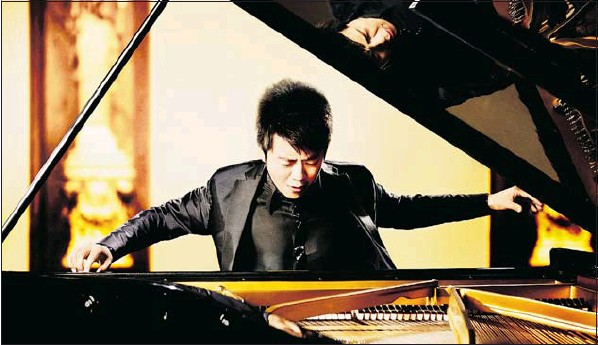
Pianist Lang Lang a Sellout
This week I’ve been in the Lower Mainland with my wife Pat as she adjudicates piano examinations for the Royal Conservatory of Music of Toronto. One evening looking at the local concert listings we lucked out. Only a few steps from our hotel, at the Orpheum Theatre on Granville, the Chinese-born classical pianist Lang Lang (pronounced Long Long) was performing. Getting tickets proved a bit of a scramble. With BC’s large Asian population centred in the lower mainland, anytime the brilliant pianist plays Vancouver tickets are as scarce as hen’s teeth. 
In China Lang Lang enjoys megastar status and is an inspirational icon for over 40-million school age youngsters currently taking classical piano lessons in the country. Add to this total another 90 million learning other instruments, and such figures become staggering when taking into account that the entire population of Canada is pegged at somewhere around 34 million souls. 
Meanwhile in this province we continue treating cultural endeavors as expendable. Government funding for the arts in BC is cancelled at whim, a thoughtless practice that can lay waste an entire generation of talented artists. 
In an interview before Lang Lang’s Vancouver concert, the pianist stated: “a generation ago people used to worry that classical music would eventually die out, but now we know this is definitely not the case. The tradition has been invigorated by Asian performers”. Regretfully the ever-shifting politics governing arts funding in this province will guarantee many of our most talented citizens will not be part of this renaissance. 
My blog last week regarding Glenn Gould’s search for the perfect Steinway piano sparked a number of responses. Reader Don Cox emailed a story about the whereabouts of Glenn Gould’s “other” piano, a small grand made in 1895 by the Boston-based firm Chickering. Purchased by Gould in 1957, he used the piano to practice on for his U.S. debut. He loved the piano’s touch but because of its small size it was unsuitable for the concert stage. 
Don Cox grew up in Port Alberni and after graduating from the ADSS music program he went on to play bass and tuba with Canadian Forces bands across the country. Don wrote that the piano “was given to the Canadian Government, and it’s in Rideau Hall (Gov Gen's residence in Ottawa), in the main Ballroom where all the ceremonial occasions take place. When I was serving with the Central Band of the Canadian Forces (Air Force band in Ottawa) we had a String Quintet (2 violins, viola, cello and piano) and a Jazz Quartet that alternated playing the ceremonial functions in Rideau Hall (and there were a lot of them !!!! ). With either group the Gould piano, as it was known, was used. We never knew who was going to be at these functions. When it had to do with the Arts (awards and such) it was especially interesting to see who would be there.
We had a pretty good piano player with us then, and I remember on one occasion when we were there with the jazz quartet, he looked up after finishing his solos, and there at the end of the piano, sitting in his wheelchair, was Oscar Peterson. Oscar just nodded and said "nice work son" and rolled away. Good thing he didn't know he was there before!”
Sky-Training around the Lower Mainland this week I’ve had the opportunity to play on many different pianos – namely Yamaha and Steinway Grands. However there is a relative newcomer in the high-end piano world. One day I visited the Showcase Pianos store at Aberdeen Centre in Richmond. Showcase Pianos is one of a limited number of outlets in Canada for an Italian made piano called Fazioli. The company was started in1978 by Paolo Fazioli in a village northeast of Venice called Sacile. A trained mechanical engineer as well as a musician, Fazioli set about reinventing the modern piano. Assembling a skilled team of acoustic engineers, wood- workers and piano makers, the first prototype was produced in 1981. Still a boutique business, the company produces only 120 pianos each year entirely by hand.
In producing a superior piano sound, one of the most important parts of the instrument is the sounding board. In Fazioli pianos the wood comes from the same trees as Stradivarius violins - red spruce from Val di Fiemme in the Italian Alps. Over a period of three years, the timber is transformed in a laborious process that includes a natural drying period taking between six months and a year.
As you might guess, such a defined process pushes the price of these high-end pianos into the stratosphere. When the Vancouver dealership opened in 2007, the owner hoped to sell two or three Fazioli pianos each year; instead, he’s managed to sell 30. If cost is a factor, the store suggests you look elsewhere. How does an average price tag of $225,000 (before HST) grab you? Want an even better model? The Fazioli piano below is tagged at $450,000.


PHOTO (above) A Fazioli piano at the Aberdeen Centre in Richmond.  Fazioli built what may be the most futuristic-looking grand piano ever made. The piano is designed to be used aboard a yacht with a unique leg that is permanently fixed to the floor in case of rough seas.


PHOTO (above): For the Olympics last year, Tom Lee Music and Steinway created a one‐of‐a‐kind art project in the form of a Steinway concert grand piano decorated by Haida artist Jay Simeon. The piano named Kuniisii - Music & Mythology is valued at more than $500,000 and joins Steinway’s collection of Art Case pianos, which have been created by artisans the world over since 1857. In this case, Jay Simeon used acrylic paint made from ground argillite – a type of stone found only in the Queen Charlotte Islands of BC. A fitting theme for the piano, his creation features Kuniisii, the supernatural being who gave the Haida people songs and music.


PHOTO (above): Pat has been examining ARCT Performance and Piano Pedagogy exams this week on the Lower Mainland with Toronto colleague Dr. Chris Foley. Chris introduced us to some wonderful Chinese Cuisine in Richmond. 
If you’re a pianist you should check out his blog at

Closing Chord: 
As a member of the BC Choral Federation Advocacy Network, I’ve been asked to pass along information regarding the government’s recent decision to prohibit adult performing arts groups from applying for Lottery Grants. Historically, charity has been used as the leverage to gain public acceptance of gambling. It started out simply enough with a few charity bingos and some pull-tab lottery tickets operated and sold by the charities themselves. Later, as most British Columbian’s are aware, the whole process grew and was taken over by the government. Over the years the percentage of proceeds dedicated to charity have shrunk from 100% (1969) to 50% (1985) to 33.3% (1999) to less than 10% (2010). Simply put, as a person who for over 20 years promoted charity gambling in order to raise funding for art’s groups, I feel totally betrayed.
However, it comes as no surprise. Now that we’re in the midst of a B.C. Liberal Leadership race, some of the candidates are promising to restore arts grant funding if elected. I am not holding my breath. One thing I’ve learned about B.C politics in the last few years is that honesty is a rare commodity. 
JAZZ NIGHT: A reminder that The Griffith/Hiltz Trio from Toronto is performing in the Alberni District Secondary School Auditorium on Tuesday evening (Feb 2nd). Student groups get things underway at 7pm. Admission by Donation.

Tuesday, January 25, 2011

A Romance on Three Legs
A few blogs back I was extolling the virtues of the Yamaha Disklavier, a traditional acoustic grand piano with built in digital electronics for recording and instant auto playback. When I wrote the blog I’d just attended a workshop on the incredible piano at Tom Lee Music in Vancouver. I was intrigued by the musical possibilities offered by connecting the instrument to a computer and the Internet. 
Reporting back to my wife Pat, we began toying with the idea and crunching the dollar numbers it would take to acquire one for her studio. Lately we’d been worried about the condition of our Steinway Grand after decades of heavy use. The piano seemed to be losing its tonal sonority. We purchased the 1924-built instrument in the 1960’s from Eaton’s, at that time the exclusive Steinway dealer for all of Canada. The thought of now using it as a trade-in (on even a high-end Asian-built instrument) was not a welcome thought.
For those readers who don’t know keyboard instruments, a Steinway Grand is considered the Mercedes of pianos. According to Forbes.com, a “Steinway piano...is a singularly inspired investment -- an instrument that combines the joy of musical perfection with the security and reassurance of financial appreciation. It is, quite simply, a treasured possession that grows in value over the course of time. Over the past ten years, the retail value of a Steinway concert grand has appreciated nearly 200%.” 
At Tom Lee’s Music in Vancouver I spoke with one of the keyboard consultants and asked whom they employed to service the pianos they sold on Vancouver Island. He mentioned a piano technician who had worked for the Vancouver store and was now retired in Nanaimo. He has continued covering the store’s island sales. I phoned the technician the following day and discovered he’d had training at the Steinway factory in New York. Talk about luck. Agreeing to have a look at our Steinway, he spent 6 hours working on our piano and, although there is still some work to be done, has literally brought the instrument back to life. Our treasured Steinway as far as we’re concerned is not going anywhere.  
Packing up his tools, the technician mentioned a book he was reading entitled A Romance on Three Legs.  Finding a copy at Chapters the following day, I haven’t been able to lay it down. Written by New York Times correspondent Katie Hafner, the book is a detailed account of the compulsive search for a sensitive, highly responsive concert piano by Canadian musical wunderkind Glenn Gould. Presented is a fascinating biography of Gould who was known for many quirks, including the wearing of winter clothing in the middle of summer. 
I can verify this as fact, having seen the unapproachable Gould wandering Stanley Park’s seawall in July of 1958 wrapped in a heavy overcoat, a rakish cap perched atop his head and wearing a pair of wool gloves without fingers. Stopping periodically, Gould would begin sweeping his arms skyward as if he were conducting an invisible symphony orchestra. I was in Vancouver attending the 1st Vancouver International Festival. I had tickets for a play (Lister Sinclair's The World of the Wonderful Dark), the French mime artist Marcel Marceau, and the Oscar Peterson Trio. Having not yet met my soul mate Pat, my love of classical music still lay dormant and I skipped attending the festival recital by Glenn Gould, an opportunity that I now regret. In 1964 Gould suddenly, at the peak of his career, gave up the concert stage forever in favor of the recording studio. 
A Romance on Three Legs focuses on Gould's love for a particular piano, a Steinway concert grand known as CD318 (C, meaning for the use of Steinway Concert Artists only, and D, denoting it as the largest that Steinway built). Hafner’s narrative follows the piano from the day it was born on Steinway’s New York factory floor in 1942 through to the moment of discovery by Gould in Eaton’s Toronto Store in 1960. Used for many of Gould’s best recordings in subsequent years, the piano was unfortunately dropped by movers while in transport between Cleveland and Toronto after a cancelled recording session Gould was to do with the Cleveland Symphony. Throughout his life Gould was notorious for cancelling out on contracts. Understandably it kept his lawyer very busy.
Readers are introduced to the world and art of piano restoration and tuning, including a central character in Gould's life, the blind technician Verne Edquist who lovingly attended to the pianist’s favorite Steinway for more than two decades. Well documented are the attempts by Edquist, the Steinway factory and others to restore the piano after the moving accident to Gould’s high technical expectations. After Glenn Gould’s passing in 1982, the piano was sent along with all his personal possessions to the National Library of Canada in Ottawa. Recitals are still performed on the Steinway including pianists playing at the city’s annual International Jazz Festival. Those who play the instrument say it’s the finest piano they’ve ever performed on. 
Early in our married life I recall Pat often playing a 1955 12-inch LP of Glenn Gould performing Bach’s Goldberg Variations, the recording that skyrocketed the Canadian pianist to international fame. It would become the most popular classical solo-instrumental album ever, selling an astonishing 1.8 million copies. Reading Katie Hafner’s book I realized I’d not given an intensive listen to the recording since. Downloading from itunes the Goldberg Variations version that Gould re-recorded in 1981, I’m listening to the album on my Apple computer as I finish this blog. Through earphones Gould’s eccentric habit of humming along as he played can clearly be heard. 


    PHOTO: A corner of the Steinway Piano Floor at Tom Lee Music in Vancouver